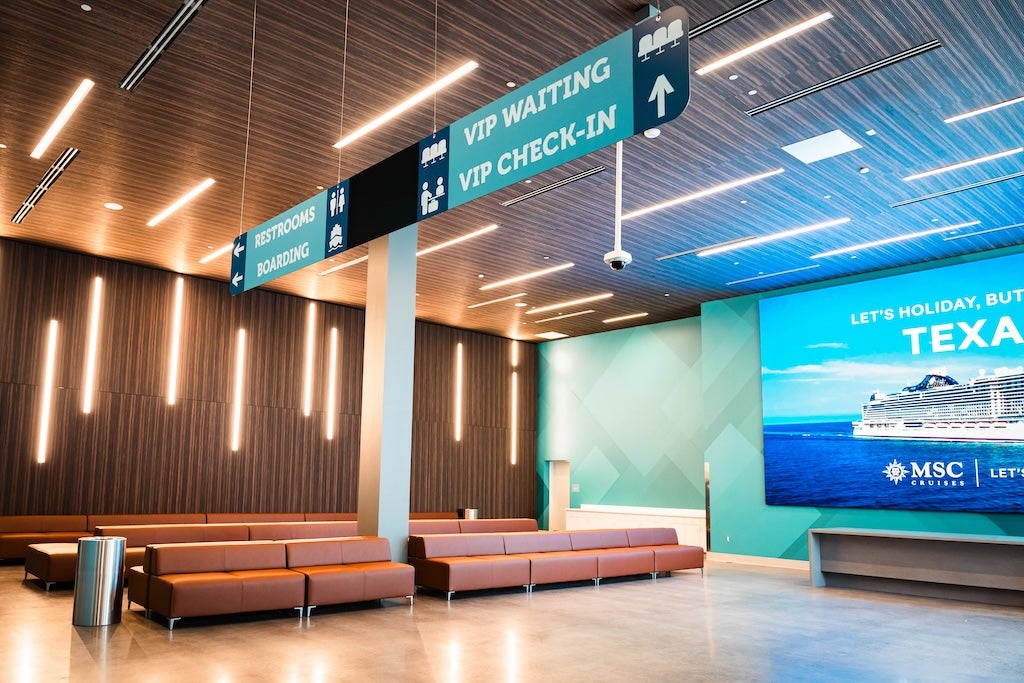


Cruise Terminal 16
Cruise Terminal 16
OVERVIEW
When the Port of Galveston converted a decades-old cargo warehouse facility into a thoughtfully designed, state-of-the-art cruise complex, it made a commitment to environmental sustainability.
Opened in November 2025, the Cruise Terminal 16 complex earned LEED Silver certification with a range of energy efficient and environmental stewardship designs. Features include the following:
- Reduced Parking Footprint: Parking was reduced by 43 percent from industry baselines, encouraging alternative transportation use and minimizing paved areas, which helps reduce heat island effects.
- Light Pollution Reduction: Exterior lighting was designed to limit uplight and light trespass, reducing nighttime glare and minimizing impacts on the surrounding environment.
- Indoor Water Use Reduction: The project achieved a 35 percent reduction in indoor water use with low-flow and WaterSense-labeled fixtures, with water sub-metering installed to ensure ongoing monitoring and leak detection.
- Environmentally Preferable Refrigerants: The building design utilizes R-454B refrigerant, resulting in a refrigerant impact of 32.52 per ton and reducing the project’s contribution to climate change compared to conventional refrigerants.
- Energy Performance Optimization: The project achieved 29 percent energy cost savings through a combination of high-efficiency lighting, enhanced envelope performance, and high-efficiency HVAC units.
- Lifecycle Impact Reduction: The project reused approximately 85 percent of the existing structural elements, significantly reducing material consumption and embodied carbon associated with new construction.
This is the second cruise terminal at the port to earn LEED certification. Cruise Terminal 10, home to Royal Caribbean Cruise Line, boasts LEED Gold certification, as well as LEED Zero Energy and LEED Zero Carbon certifications.
The LEED rating system is the world’s most widely used green building certification program. LEED-certified buildings are designed to reduce energy and water consumption, lower greenhouse gas emissions, improve indoor environmental quality and support sustainable construction practices.